
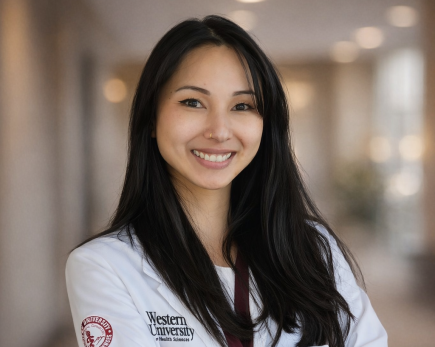
By Huong Trinh, Third-year Optometry School Student, Western University of Health Sciences
If you’re in optometry school right now, I don’t need to convince you that it can be intense. Between lectures, labs, clinic, exams, and trying to keep up with life, it can feel like you’re constantly sprinting. I’m currently in my third year, and with NBEO Part I just around the corner, it’s safe to say the pressure feels very real.
I used to think “balance” meant having everything perfectly organized and sticking to the same routine every semester. Now, I’ve learned that balance means making adjustments and adapting while still holding onto habits that keep me grounded when things get busy.
Here are a few strategies that have helped me maintain balance in optometry school, become a stronger student doctor in clinic and stay grateful through it all.
A Schedule You Can SEE Makes a Difference
One of the biggest (and most recent) changes I made was putting my weekly schedule and assignment due dates somewhere that I can physically see every day.
Yes, I still use my phone/laptop calendar but having my weekly plan posted on my wall has a completely different effect—almost like checking the clock. It keeps me more aware of time, deadlines, and how I’m actually spending my days.
When my schedule is visible, I’m less likely to procrastinate or spiral into that anxious feeling of, “Ah! I feel like I’m forgetting something.” It sounds simple, but it truly helps me stay on track.
Meditation to Combat Fatigue
Let’s be honest, getting a full 8–9 hours of sleep is a luxury as an optometry student, and most of the time, we don’t have that luxury. On top of that, the anxiety I feel before practicals and exams can be… I guess, interesting? I’ve had moments where I felt like I was going to vomit. Sometimes the anxiety and the lack of sleep make my thoughts feel jumbled, and it becomes hard to sort out everything in my head. That’s when I’ll mediate by doing box breathing:
Inhale for 4 seconds → hold for 4 seconds → exhale for 4 seconds → repeat
I do this for anywhere between 5–10 minutes. I also use this technique during my Pomodoro (focused work during 25-minute intervals) study breaks. It helps reset my mind when I feel overwhelmed or overstimulated. There are so many other meditation techniques out there. Find one or a guide that suits you best.
Move Your Body
Studying for long hours can mess with your body more than you realize. Neck pain, back pain, headaches, and that stiff feeling from sitting too long is not fun.
One thing that helps me focus better and feel less drained is staying active, even just a little. I try to work out at least 15 minutes a day, but on busy days, I take the stairs instead of the elevator or try stretching between study blocks.
Small movement adds up. And the mental benefits are real. I retain information better when my body isn’t exhausted from being sedentary all day. Oh, almost forgot, always stay hydrated as well.
Leadership Skills Matter
During my first and second year, I served on executive boards, including sVOSH, Executive Student Government Association (SGA), Lions Club, and as an AAO liaison. Sounds like a lot, but I’m so glad I did it all.
I’m not saying everyone needs to join a million clubs. But I do think taking on an executive role can give you experiences you won’t get anywhere else. Those first two years are the perfect time to explore specialties and figure out what excites you beyond the classroom. Clubs aren’t just about looking good on a resume. They help you grow into someone who can communicate, lead, and work as part of a team. Those are skills you’ll need as a future doctor no matter what specialty you go into.
It’s better to get guidance now while you’re surrounded by mentors and support. Once you’re out in the real world, it won’t come as easily as it does now. The best time to learn is now.
Growth Through Volunteering
Being involved in clubs has also allowed me to volunteer more, which shaped the way I view patient care and serve my community. Volunteering gave me the opportunity to see some ocular conditions in person instead of just seeing it in textbooks or lecture slides. That kind of exposure really helps connect what is learned in class and makes it easier to remember.
At Western University, we’re required to complete thirty Community Service Learning (CSL) hours in order to graduate, and club involvement makes it much easier to meet that requirement. Okay…I’m not trying to brag, uh, actually, scratch that, I earned those bragging rights because by the end of second year, I was only 3 hours shy of sixty total CSL hours. What can I say, I guess I really enjoy volunteering.
I find volunteering so much more meaningful when it’s done for more than a checkbox. Interacting with patients early on helped me build confidence, and that experience carries into clinic later. Because at the end of the day, it’s easy to get so wrapped up in schoolwork that we sometimes forget why we wanted to become optometrists in the first place.
Growing into the Student-Doctor Role
Clinic is where you start figuring out the doctor you want to become. You’re learning to manage knowledge, patient interaction, time, and clinical decision-making all at once, which can be intimidating. But try to remember your basics and foundation.
There’s a saying: “If you love your work, if you enjoy it, you’re already a success.” Talking to your patient shouldn’t sound like a script, and your flow shouldn’t seem robotic. It’s important to enjoy what you’re doing, and that includes building genuine rapport with your patients. It affects patient trust, compliance, and the quality of your exam.
These are some of the things I keep in mind when building rapport with my patients:
Have humility. You don’t need to act like you know everything. The patient knows you’re a student and they’ll respect honesty, confidence, and kindness.
LISTEN to your patients. Sometimes the diagnosis is hidden in the story. If you truly listen, you’ll pick up details you would’ve missed otherwise. Making frequent eye contact as they speak while jotting down your findings shows that you’re actively listening.
Know when to move on. Clinic requires efficiency. You can’t spend too long on one part of the exam and then panic through the rest. Learning when you have “enough” information to proceed is a skill that comes with practice. Besides, you still want to look good in front of your preceptors.
Impress Your Preceptors in Clinic
Truth is, you don’t impress preceptors by being perfect. The idea of being perfect can be so daunting that it evokes unwanted emotions like anxiety, fear of disappointing them, and doubting yourself. You impress them by being prepared, teachable, and motivated.
Start by showing up at least 30 minutes early to set up and review the patient schedule. Look through the chart and quickly refresh yourself on the patient’s history. If you see medications or conditions you don’t recognize (or forgot), take a moment to look them up. Small preparation goes a long way.
When presenting your patient’s case, have an outline ready so your flow stays organized and easy to follow. Then ask for feedback. Something as simple as, “What can I improve for next time?” shows your willingness to be better and helps you grow faster.
And remember, it’s okay not to know everything. If your preceptor asks a question and your mind goes blank, that’s ok. It happens to the best of us. What matters is your mindset. By saying, “I’m not completely sure, but my thought process is…” or “I’ll look that up and follow up” shows you are motivated to learn.
Remember, you are in a learning environment. This is probably the best time to pick your preceptors’ brains, observe different techniques, documentation styles, and pick up what works best for you. Preceptors aren’t here to embarrass you. They want to see you think like a future clinician. I guess you could call it tough love.
Gratitude: The Most Underrated Leadership Skill
Optometry school is hard, and every year gets harder. I genuinely don’t think anyone gets through it alone and most likely has a support system like your professors, preceptors, admin, classmates, friends, and family. And one thing I’ve learned is that gratitude isn’t just being polite. It’s leadership.
For our professor’s birthday, I would pass around a birthday card during our breaks for classmates to sign. Once everyone signed it, I used my average calligraphy skill to write their name on the front and a “love c/o 2027” on the back of the envelope.
Sometimes at the end of the semester, my group and I will get something small but thoughtful for our professors—like basketball socks because one professor likes to play basketball, or a bag of coffee beans for another professor who is a coffee connoisseur.
I do similar acts of gratitude for friends and family as well. It’s simple, nothing extravagant, but meaningful. I believe showing appreciation builds stronger relationships, creates a better learning environment and helps shape you into a more thoughtful leader. Feeling appreciated makes you feel good and reassures you that you’re doing something right.
My Final Thoughts
Balance in optometry school doesn’t mean doing everything flawlessly. It means staying intentional, building habits that support you and learning how to reset when life gets overwhelming.
Becoming a doctor takes discipline, resilience, and heart. If you’re in the middle of the grind right now, I hope this reminds you that you’re not alone, and you’re doing better than you think.
You’ve got this. As my husband always say, luck happens when preparation and opportunity present themselves.
Huong Trinh, BA, is a CooperVision® Student Contact Lens Leader and third-year optometry student at Western University of Health Sciences College of Optometry. At Western U, Huong is the student government association library technician, former student government association recreation leader, and vice president of the school’s Lions Club chapter. She also held previous titles as the local coordinator of sVOSH, and AAO treasurer and AAO liaison.


