
Multifocal contact lenses represent a significant practice opportunity.1 Full stop.
Look no further than recent industry data that reveals multifocal contact lens patients command the highest average annual profits compared to other soft CL categories.1 What’s more, multifocal contact lens patients also outpace their progressive lens wearing counterparts by a 29% higher profitability margin.1
While modern soft multifocal contact lenses can offer a strategic avenue to boost a CL practice’s bottom line,1 studies have noted that many Eye Care Professionals (ECPs) fall short in multifocal fits.2,3
The steps to bridge this gap are simple. Here’s how.
Adopt a Proactive Presbyopia Communication Approach
First, lay the presbyopia and multifocal conversation groundwork early, says Dr. Harmin Chima, OD, FAAO Vice President, Professional Services at West Point Optical Group.
This approach can go far, according to a new report from CooperVision.4
- The survey-based report found 45% of adults aged 38-42 want their ECP to start the presbyopia conversation prior to the onset of symptoms.*5 This highlights the value of proactive patient education before presbyopia starts affecting patients’ day-to-day lives.
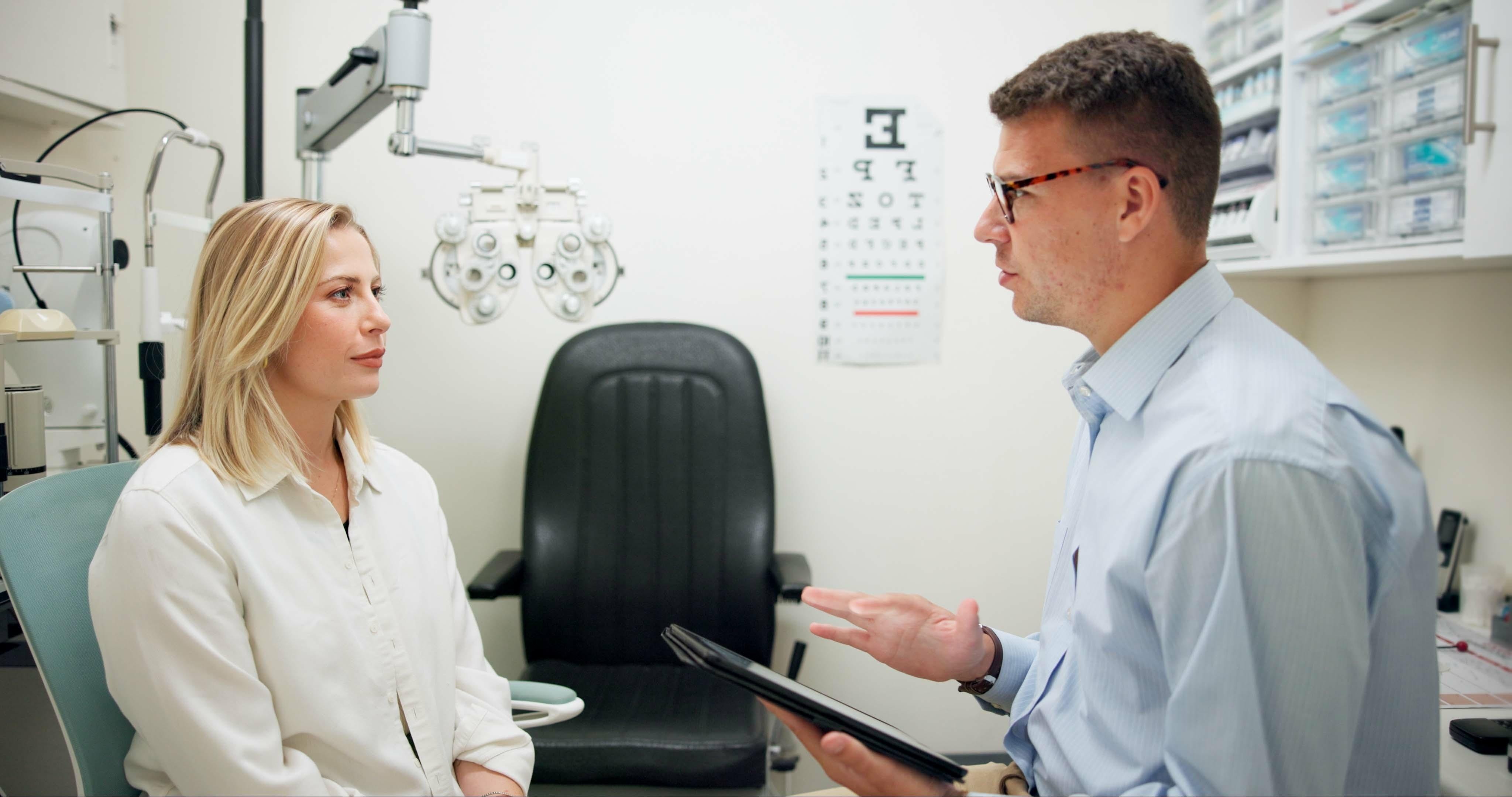
“At my practice, we start the presbyopia conversation with patients as early as their intake paperwork,” Dr. Chima explains. “On our intake form, we have specific questions geared toward uncovering needs surrounding presbyopia. That conversation continues in the exam lane through thoughtful questions around the patient’s lifestyle, occupation, and hobbies.”
- This approach can open the door to more fits: In the CooperVision survey, 77% of respondents who were very familiar with multifocal contact lenses said they would consider multifocal CLs, revealing a clear opportunity to introduce patients to an option they may not know is available.†5
Look Out for Earlier Onset of Symptoms in Younger Patients
At his practice, Dr. Chima is seeing an increase in younger patients developing pre-presbyopia.
Recent studies also support these anecdotal everyday practice findings.6,7 One study found the following factors contributed to “pre-mature” presbyopia: genetic predisposition, ocular conditions such as high myopia, glaucoma, and astigmatism, and lifestyle influences. The latter influence encompassed excessive near work and prolonged screentime habits.6
“Due to the extensive screentime that most full-time employees encounter, we’re seeing symptoms of presbyopia present sooner and sooner in a patient’s life,” Dr. Chima says. “Getting ahead of this and managing symptoms early can result in a happier patient who has more success with multifocal lenses as their near demand increases.”
Lead with Empathy During a Patient’s Significant Life Change
Like any major physical change to one’s body, presbyopia can have a tremendous emotional and mental impact, Dr. Chima explains. Losing near vision also represents a loss of independence for patients, he adds.
Leading with a compassionate and actionable approach, ECPs can help these emerging presbyopes embrace their next chapter.
“I remind my patients that as hard as it can be, presbyopia happens to everyone, and a great deal of research has gone into making great products to help them maintain their independence,” Dr. Chima says.
- This connection between the ECP and the patient matters: 62% of adults aged 38-47 want detailed information from their eye doctor about their transition to presbyopia, showing that patients value their ECP’s guidance when navigating this change.‡5
Add Multifocal CLs to the Anti-Aging Toolbox
For many patients, presbyopia may be the first sign that they are getting older. Today’s patients are investing in solutions that help them feel confident, capable and fully themselves as they age.§5 For ECPs, this presents another reason to lead the presbyopia conversation with multifocal contact lenses.
- Just consider, 49% of individuals are concerned about how their eyes look as they grow older, pointing to a broader role for eye care in supporting confidence and healthy aging.§5
“I believe the longevity trend will increase the prescribing of multifocal lenses. Two pillars of the movement are physical activity and social connection,” Dr. Chima says. “Most patients with presbyopia prefer to do these activities without glasses, so they will likely seek ways to do that. This is the perfect opportunity to offer multifocal contacts.”
- Dovetailing into the desire for freedom from glasses, 85% of individuals want products that make life easier as they age, making convenience and quality of life important considerations when discussing presbyopia solutions.§5
Match the Right Lens to the Right Patient
No matter the need of the patient with presbyopia, CooperVision offers a wide portfolio of multifocal contact lenses to match them.
“Having an array of effective contact lens options from CooperVision gives me the confidence to know I can support my patients in their presbyopic journey,” Dr. Chima explains.
CooperVision’s soft multifocal CLs include:
- MyDay® multifocal with CooperVision’s innovative Binocular Progressive System™ provides an easy fit for ECPs8 as well as comfort and excellent vision8 at all distances for wearers.9
- clariti® 1 day multifocal 3 Add is an ideal lens for new wearers with presbyopia◊10 and also features Binocular Progressive System™ for clear vision at all distances and all levels of presbyopia.9
- Biofinity® multifocal is the most prescribed monthly multifocal brand in the U.S. market11 and offers good vision at all distances, including near, intermediate and far.12 Biofinity® multifocal features Balanced Progressive® Technology with two different optical designs and four distinct Adds up to +2.50.
- For patients with both presbyopia and astigmatism, Biofinity® toric multifocal combines Optimized Toric Lens Geometry™ that delivers excellent stability and predictable orientation9 with Balanced Progressive® Technology.
Keep the Multifocal Conversation Going
Talk to your patients about multifocal contact lenses even if they don’t initiate the discussion, Dr. Chima says.
“Most patients aren’t even aware they can wear contacts, but if given the option, most of the time, they would love to,” he adds. “Contact lens patients visit our offices more frequently. They purchase more products from us. And they refer more patients to us because they are happy with the care they receive. In short, a happy multifocal contact lens patient is a valuable practice builder.”
Find out more about the multifocal opportunity, conversation starters with your patients with presbyopia and more by downloading CooperVision’s report.

Dr. Harmin Chima is Vice President of Professional Services at West Point Optical Group and is a 2015 graduate of the Ohio State University College of Optometry. Dr. Chima is a fellow of the American Academy of Optometry. He practices general optometry with a focus on dry eye, glaucoma, and myopia management. He has published multiple papers, participated in clinical trials, and has presented over 75 lectures. Dr. Chima has served as president of the Cleveland Optometric Association and is a member of the Ohio Optometric Association and American Optometric Association.


