

The idea that physicians should advocate for their patients is woven into the fabric of daily practice. Beyond the exam room, advocating for the profession as a whole can turn a single voice into a powerful chorus.
But how can Eye Care Professionals (ECPs) take the first step in advocacy?
Dr. Shane Foster, owner of Athens Eye Care, has long advocated for optometry in his home state as past president of the Ohio Optometric Association (OOA). And as a Change Agent in the Myopia Collective, Dr. Foster recently championed children’s vision on Capitol Hill.
In this Q&A, Dr. Foster describes simple ways that ECPs can get involved in advocacy, best practices in how to make your voice heard with elected officials, and more.
Why should ECPs consider lending their voices to legislative advocacy issues that support the broader profession? How does one voice matter?
Dr. Foster: As health care professionals, we advocate for our patients in our clinics every day. However, some of the most significant obstacles to efficient and effective patient care exist outside the exam room and within the halls of our state houses and on Capitol Hill in Washington, DC. As a legislated profession, optometry’s future is in the hands of our elected officials, so it is imperative that we take an active role in advocating for our profession and for our patients.
It’s easy to feel like one voice, like one vote, doesn’t matter, but I have seen firsthand that it does. When I went to Capitol Hill as a Myopia Collective Change Agent, I met with the office of my Congressman (Representative Troy Balderson) to discuss HR 2527, the Early Detection of Vision Impairments in Children Act. Just two hours after that meeting, I received an email from the Congressman’s staff, confirming that Representative Balderson would be joining the bill as a co-sponsor to help further the cause. That single conversation helped push the bill forward and likely made a lasting impact on that Congressman’s office.
When enough individual voices come together, that is when real change happens.
What are some easy ways that ECPs can get involved?
Dr. Foster: Getting involved in advocacy doesn’t always mean taking time away from the office to travel to your state capital or Capitol Hill. You can start with small steps:
- First and foremost, if you haven’t already, become a member of the American Optometric Association (AOA) and your state association or affiliate. They are advocating on behalf of ALL optometrists every day. Your membership helps make that possible!
- Respond to the calls to action that are put out by the AOA and your affiliate. They will generally provide a form letter that you can customize and send to your elected official with no more effort than a few clicks and a few minutes.
- Work to build a relationship with your state representative or state senator (or even your federal legislators if you have a connection with them). Invite them to your office for an informal meeting. Show them what you do, how you serve their constituents, and your important role in the healthcare system.
- Attend a lobby day with your state association or visit Washington, DC, for AOA on Capitol Hill. These events where you can join colleagues in advocacy and have one-on-one meetings with your elected officials can have a tremendous impact.
- You can even advocate right in your own office. Educate your staff on the important role that optometry has in the medical community and how we care for patients. Talk to patients about what you do as an optometrist and how expanded scope of practice or change in vision care plan regulations would help you serve them better.
Every conversation, no matter how seemingly small, could be the impetus for change.
You own three practices, are a Change Agent in The Myopia Collective, and you still find the time to advocate for the profession. How did you first get involved in legislative advocacy, and can you share some recent initiatives that you’ve supported?
Dr. Foster: I was not really involved in advocacy early in my career. As a student, I was a member of the American Optometric Student Association, but I cannot say I was an active member. My first introduction to legislative advocacy was when I took on a leadership role within my local Zone of the OOA.
As the Zone Governor of a rural, sparsely populated area, I wore many hats. I was Zone Governor, treasurer, membership chair, and legislative liaison. I learned about the important issues that the OOA was working on, and it sparked my interest to get more involved. I was elected to the OOA Board one year later. At the state level, I have been involved in important initiatives such as repealing the state sales tax on prescription ophthalmic devices and a bill to limit abuses and restrictions by vision care plans.
As President of iSee Ohio, I was also involved in earning an appropriation of $2.5 million for the Ohio Children’s Vision Initiative, a program run by the Ohio Optometric Foundation to increase access to pediatric vision care across the state. Recently, we’ve had major advancements in the children’s vision area, when Ohio Governor Mike DeWine launched OhioSEE (Ohio Student Eye Exam), a sweeping program designed to ensure that children in grades K-3 who fail a school vision screening will have access to a comprehensive eye exam and glasses, regardless of their insurance status or their family’s ability to pay. All of this was achieved while also working diligently to expand our scope of practice in Ohio (legislation is still pending in the Ohio Senate).
I have also been active in advocacy at the federal level, attending AOA on Capitol Hill for over a decade, and representing the Myopia Collective in Washington, DC, last year. I have also been a member of the AOA State Government Relations Committee for the past three years.
What are your top tips to effectively communicate with congressmen and other elected officials?
Dr. Foster: First and foremost, remember that you know infinitely more about optometry than they do! Your elected officials come from all different backgrounds – attorneys, farmers, insurance agents, teachers, businesspeople, etc. Very few of them have a background in health care. So, you can serve as their expert.
Some key tips to talking with your state legislators or members of Congress include:
- Tell real patient stories. Those are the most impactful. Be sure to maintain privacy and confidentiality.
- Keep it patient centric. Focus on how our issues affect access to care and quality of care for the constituents in their district, NOT how it affects your practice.
- Be respectful of their time. Arrive early and be efficient. Hit one or two key points–you may not get much time.
- Follow up and stay engaged. Building trust and a relationship over time matter more than a single conversation.
Is there anything else that you think is important to add?
Dr. Foster: I think one of the biggest misconceptions is that advocacy is only for “leaders” or people with titles. Honestly, the most effective advocates are those who are passionate enough about their patients and their profession to speak up and get involved. We are at a pivotal moment in advocacy for optometry. With scope of practice expanding now in more than 15 states, the dominos are beginning to fall, but it will take active advocates across the country to keep that momentum going. We are also seeing great strides in vision plan legislation and children’s vision advocacy. With all this support, we cannot stop now. We will need to join forces and continue to tell stories about the good work we do as Doctors of Optometry so that we can continue to propel our profession forward.
At the end of the day, advocacy is really an extension of patient care. It’s not just about how we care for the patients in our own practice, but how we stand up and speak up to improve care for patients everywhere.
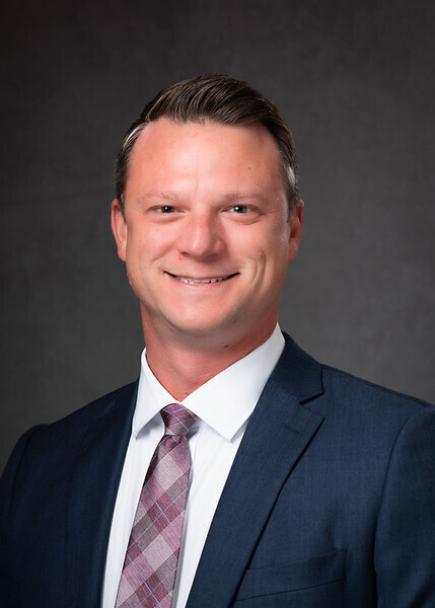
Dr. Shane Foster is the owner of Athens Eye Care and graduated cum laude from the Ohio State University College of Optometry in 2008. He is experienced in fitting specialty contact lenses for patients with corneal abnormalities or complex prescriptions. He also has an interest in pediatric optometry and the crucial role that vision plays in literacy, learning, and academic success. Dr. Foster is the Past President of the Ohio Optometric Association and a Fellow of the American Academy of Optometry. He is the current President of the Ohio Optometric Foundation and oversees the Ohio Children’s Vision Initiative, which provides charitable eye care programs to children across the state. He is a member of the American Optometric Association and volunteers on the State Government Relations Committee. Dr. Foster also chairs the Vision to Learn Ohio Advisory Board, which oversees mobile eye exam programs operating in the state. For his volunteerism and leadership within the profession of optometry, Dr. Foster was presented with the Early Professional Achievement Award from the Ohio State University College of Optometry in 2023.


