

By Essence Johnson, OD, FAAO
As new doctors of optometry (ODs) enter the profession, student loan debt quickly becomes one of the most significant financial realities they face. The most common advice is to pay it off as quickly as possible.
But that approach does not fit every situation. For some, a long-term strategy can lead to a very different outcome.
While there are several different loan repayment options available for new ODs, my journey is one example of what it looks like to take the long road intentionally.
Starting Point
When I graduated in 2010, Public Service Loan Forgiveness (PSLF) was still new. Many of the repayment options and flexibilities available today did not exist yet.
Like many graduates, I entered practice with significant debt and high monthly payments, often between $1,100 - $2,500 even on an income-driven plan.
I also paid off nearly $22,000 in private loans early, eliminating debt that had no forgiveness option. What remained was my federal loan balance.
What PSLF Actually Is
PSLF forgives the remaining balance on your Direct Loans after:
- You make the equivalent of 120 qualifying monthly payments under an approved repayment plan
- While working full-time (at least 30 hours per week) for an eligible employer
That’s it.
It is not something you enroll in. It is a result you earn over time.
Key details:
- Payments are typically made under income-driven plans
- Only Federal Direct Loans qualify, though consolidation can make other loans eligible
- Employment and payments should be certified regularly
In simple terms, PSLF rewards consistency.
Moving Forward Without Perfect Information
When I relocated to Dallas, TX, I began working in a county hospital system that qualified for PSLF.
At the time, not all of my loans were eligible, and I did not fully understand the details. Still, I moved forward based on alignment with public service.
Life and Career Along the Way
About six years into repayment, I got married and started a family. Two years later, we welcomed our second child.
Like many professionals, my financial responsibilities expanded. Student loans remained important, but they were no longer the only priority.
This is the reality for most new graduates. Financial decisions happen alongside real life.
Burnout, Policy Changes, and Progress
About eight years into my PSLF journey, the pandemic shifted everything.
I experienced burnout and stepped away from my hospital role. At the same time, federal loan policies evolved. I was able to consolidate previously ineligible loans, making them eligible for PSLF.
Those loans were ultimately the first to be forgiven.
During this period, my payments also dropped significantly under updated repayment structures, sometimes as low as $0.
Completing the Journey
I completed my remaining qualifying payments while working in K-12 education.
After 14 years and 120 qualifying payments, my federal student loans were fully discharged through PSLF.
The Financial Impact
- Original federal loan balance: $230,628.06
- Total paid: ~$100,800
- Total forgiven: $262,949.24
The forgiven amount exceeded what I originally borrowed due to accrued interest.
For comparison:
- 10-year repayment: ~$318,700 total
- 25-year repayment: ~$480,600 total
This approach allowed me to meet my obligation without paying two to three times the original balance. Of note, PSLF requirements and outcomes can change, and individual situations can vary. Before pursuing this route, you should seek out federal student aid resources or a financial professional for guidance.
Lessons Learned
- Strategy matters, but flexibility matters more
- Consistency over time creates the outcome
- Life will influence your financial decisions
- Public service can take many forms
- You do not need a perfect plan to succeed
Residency Consideration
If your residency site qualifies and you are on an eligible repayment plan, those payments can count toward PSLF.
Starting early can shorten your path to forgiveness.
Final Reflection
PSLF is often debated as a strategy, but in my case, completion changed the equation entirely.
Student loans are an obligation. The goal is not simply to pay them, but to do so in a way that does not cost two or three times what was originally borrowed.
When pursuing loan forgiveness, paying more does not always mean saving more. In my case, keeping payments aligned with the program allowed me to maximize what was ultimately forgiven. Even though I paid nearly $2,500 a month for years, PSLF still prevented me from re-paying hundreds of thousands more.
My journey was not perfectly optimized, and it could not have been. The rules changed over time. Early on, I paid what the system required. Later, as policies evolved, my payments adjusted. I adapted and stayed the course.
That is the real strategy.
This path is not for everyone. It requires qualifying employment, consistency, and a long-term commitment. Without follow-through, it can become expensive. But when understood and executed intentionally, it can be one of the most powerful financial tools available to healthcare professionals.
For those who question it, the numbers speak for themselves.
For those considering it, the takeaway is simple: you do not need a perfect plan. You need a clear understanding of your options, the discipline to stay informed, and the commitment to see it through.
I am finally student debt free, and that freedom is one of the most liberating and hard-earned accomplishments of my career.
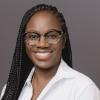
Essence Johnson, OD, FAAO, is the Executive Director of Black Eyecare Perspective and Director of Healthcare Careers at Uplift Education. A graduate of the Pennsylvania College of Optometry at Salus University, she and her Black Eyecare Perspective colleagues received the university’s Presidential Medal of Honor in 2022. She completed a residency in ocular disease, serves as an associate professor at Rocky Mountain University of the Health Professions School of Optometric Medicine, and practices as a community health and clinical trial optometrist.
Dr. Johnson is known for expanding pathways into healthcare for underrepresented students and co-founded the Black Eyecare Perspective Pre-Optometry Club. She lives near Dallas, TX with her husband and two children.


