
Today, educating patients extends far beyond a practice’s walls. In the current era of hashtags, reels, and AI driven searches, social media offers eye care professionals (ECPs) powerful opportunities to educate a wide audience and across a variety of channels.
But how can a practice maximize its patient education reach on social media?
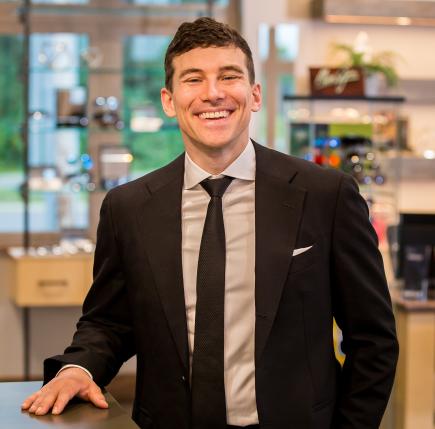
For starters, create content that is genuinely useful to the patients you treat, says Joseph Allen, OD, FAAO, creator of the Doctor Eye Health YouTube channel which boasts over 1 million subscribers and 192 million views.
“Social media has dramatically changed the landscape of patient education because health information is now accessible almost everywhere, on phones, tablets, computers, and even televisions,” Dr. Allen says. “It also connects with search engines across multiple platforms. Now many videos, articles, and social posts are being indexed, summarized, and recommended by AI tools.”
Start With the Right Intention
When Dr. Allen launched his YouTube channel in 2018, he had no formal social media training. Growth was slow during the first few months, he recalls. Despite the lack of early progress, Dr. Allen forged ahead, driven by his commitment to help people better understand their eyes and vision.
“As an eye doctor, I often saw how difficult it could be for patients to fully grasp the seriousness of certain eye health conditions like glaucoma or why compliance with treatment and follow-up care was so important,” he says. “Even something as routine as dilation could be hard for patients to understand if they didn’t know what optometrists look for or why it matters.”
That educational mission must come before audience growth, he says.
“Don’t pursue this to make you popular, grow a business quickly, or generate revenue,” he says. “You have to genuinely enjoy the process and believe in the value of educating people. It takes time, patience, and consistency before you see meaningful traction.”
A Powerful Extension of Patient Education
Patients often turn to the internet to research medical information, including symptoms and potential diagnoses.1 In fact, one study found that nearly 59% of adults used the internet to look for health or medical information.1 Social media expands that reach, giving clinicians the ability to educate audiences around the clock.
In eye care, social content can reinforce the importance of routine exams, explain disease progression, and help patients understand treatment options. Unlike traditional educational materials, social media also allows clinicians to communicate through visual, personal, and relatable formats that build trust and make complex topics easier to understand, he says.
“When used responsibly, social media can be a powerful extension of patient education and public health communication,” Dr. Allen adds.
Tips for Getting Started
For ECPs interested in building an educational presence on social media, Dr. Allen recommends starting with a familiar source of content: patient questions.
“You don’t need highly produced videos or a complicated strategy,” he continues. “Think about the questions you answer every day: Why do I need dilation? What is dry eye? Can I sleep in my contact lenses? What is glaucoma? Those are often the same questions patients are already searching for online.”
These can be turned into short videos, blog posts, reels, website resources, and follow-up materials.
He also advises ECPs to focus on education rather than promotion.
“Patients can tell when something is only promotional,” he says. “If your goal is to genuinely help people understand their eyes, vision, and care options, that authenticity tends to come through.”
Content should also be simple and accessible. While clinicians are accustomed to speaking in technical language, patients often want clear explanations, visuals, analogies, and practical takeaways. The goal is not to oversimplify the science but to make it understandable, Dr. Allen advises.
While consistency matters, so does sustainability. Rather than trying to master every platform at once, Dr. Allen suggests choosing one channel first, establishing a realistic posting schedule, and improving production quality over time.
“If you can use social media to make eye care less confusing, help patients feel more prepared for their visits, and encourage people to seek appropriate care, then you’re already providing a valuable service,” he says.

Growing an Audience in Your Local Community and Beyond
Audience growth begins with creating useful content for the patients already in your practice, Dr. Allen suggests.
He also views collaboration as one of the most effective ways to expand reach. For example, partnering with local healthcare professionals, schools, businesses, fitness centers, parent groups, or community organizations can introduce eye health education to entirely new audiences.
For local growth, ECPs should also consider where their community members spend time online. This may include local Facebook, parent and neighborhood groups, school communities, chamber of commerce pages, or special interest organizations.
“The key is not to simply promote yourself, but to participate in a helpful and professional way. Answer common questions, share useful resources, and become known as someone who provides trustworthy information,” he says.
The biggest principle is that audience growth usually follows value, Dr. Allen continues. If content helps people understand their eyes, make better decisions, feel less afraid, or know when to seek care, then they are more likely to follow, share, and remember you. Over time, that can grow from local community awareness into a much broader patient and consumer audience, he says.
“Eye care overlaps with so many areas of life,” he says. “Collaborating with other trusted voices helps introduce your expertise in a way that feels natural and valuable.”
AI’s Impact
AI is already reshaping how clinicians create patient educational content, Dr. Allen explains. For busy practitioners, AI tools can streamline brainstorming and scriptwriting, to name a few, he adds.
“AI can help newer creators close the gap more quickly,” he says. “It can support many steps in the process and help clinicians communicate complex medical topics in a clearer, more approachable way.”
However, technology can also present significant risks, Dr. Allen cautions. He cites misinformation as one major concern. AI-generated content can be created quickly and at scale, but not all of it may be accurate or appropriately nuanced, he says. In healthcare, that is a real problem because patients may act on information that is incomplete, misleading, or not relevant to their specific condition, Dr. Allen says.
Additionally, AI-generated misinformation can rapidly spread, and the rise of deepfakes has created new concerns around misuse of clinicians’ voices, images, and intellectual property, he notes.
“I’ve personally had to deal with bad actors using my likeness, voice, or content to promote products that I have never endorsed and would ever recommend. Unfortunately, many of the people responsible are difficult to identify, located outside of practical legal reach, or nearly impossible to track down,” he says.
For that reason, Dr. Allen believes that AI is both a powerful tool and one that clinicians need to approach responsibly. It should not replace clinical judgment, fact-checking, or professional oversight, he adds.
“The key is to use AI as an assistant, not as the authority,” he says. “The doctor still needs to guide the message, verify the accuracy, and maintain professional oversight.”
Rely on CooperVision Resources
If you’re ready to launch or expand your patient education through social media, CooperVision offers numerous, ready-made assets for practices. Find out more here, along with a wealth of other marketing resources.
Dr. Joseph J. Allen graduated Magna Cum Laude and Salutatorian from the Rosenberg School of Optometry in 2015 and completed his residency at the Minneapolis V.A. Medical Center. Dr. Allen is a Fellow of the American Academy of Optometry and a Diplomate of the American Board of Optometry. He is a member of the American Optometric Association, the AOA Strategic Communications Committee, and he completed the AOA leadership training in 2022. He was also awarded the Media Advocacy award from the AOA in 2021. He is a practicing optometrist in Virginia and the founder of Doctor Eye Health, an educational YouTube channel and Podcast with more than 1 million subscribers.


