
A Decision Built on Trust: Parents Want MiSight® 1 day for their Children with Myopia

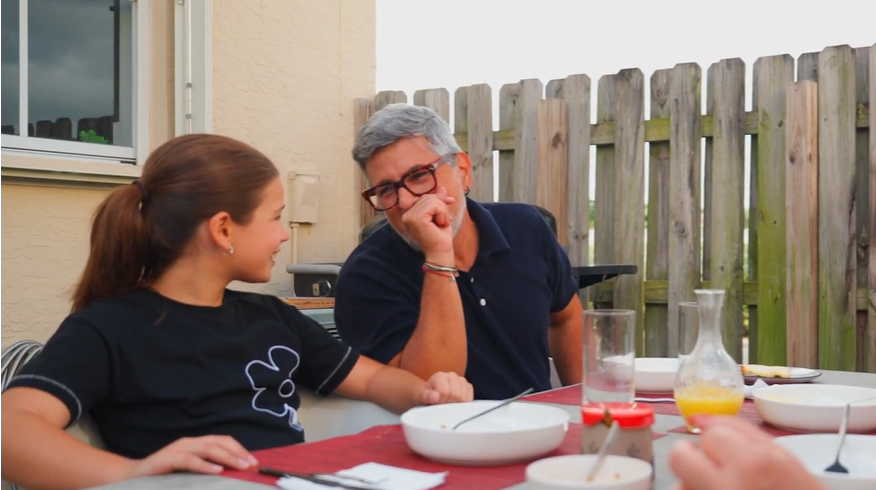
Picture of father and daughter outside smiling and talking

Trust is at the heart of every treatment decision for a child with myopia. For eye care professionals (ECPs), they can trust the science behind myopia control contact lenses.1 After all, MiSight® 1 day* has been carefully vetted, worn worldwide by 225,000 kids and counting,2 and proven to help slow myopia progression in children.†1 Beyond the studies and telling statistics, ECPs can trust another given: parents trust their eye doctor and want the best treatment for their child. Simply put, parents want MiSight® 1 day.

Just consider what we know: 

  • 7 out of 10 families will purchase treatment when their ECP prescribes MiSight® 1 day.3 Further, once a parent learns about MiSight® 1 day, 80% will act to learn more within a month.‡4
  • For the parents of spectacle lens wearing kids, 70% struggle to make sure that their child wears their glasses,5 Getting enough hours of wear, of course, is key since it directly correlates to the efficacy of myopia treatment, whether that’s myopia control soft contact lenses or glasses.6,7
  • From the dance recital stage to the basketball court, MiSight® 1 day contact lenses offer “always-on” myopia control because children wear them all day, and myopia control contact lenses don't get in the way of active lifestyles.§8
  • Finally, MiSight® 1 day can be the bridge that grows the ever-important doctor-patient relationship: 87% of MiSight® 1 day prescribing ECPs agree that prescribing MiSight® 1 day to patients with myopia has strengthened their relationship with those families. à3

Need another reason to believe? Watch these short videos with real parents who share the real difference MiSight® 1 day is making in their children’s lives.8

Lester’s Story: What Do I See? Nothing is Holding You Back: 


Cynthia’s Story: Two Children, One Treatment, An Investment that Delivers Results:


Discover more about MiSight® 1 day here.

19291
More Blog Posts
Related posts

*Indications for use: MiSight® 1 day (omafilcon A) soft (hydrophilic) contact lenses for daily wear are indicated for the correction of myopic ametropia and for slowing the progression of myopia in children with non-diseased eyes, who at the initiation of treatment are 8-12 years of age and have a refraction of -0.75 to -4.00 diopters (spherical equivalent) with ≤ 0.75 diopters of astigmatism. The lens is to be discarded after each removal.

†Compared to a single vision 1 day lens over a 3-year period.

‡28% immediately, 27% within one week, 25% within one month; in total 80% ranging from immediately to a month.

§In clinical study, mean weekday wear time increased from 12.8 hours/day at 6-months to 13.9 hours/day at 6-years with a mean of  > 6.5 days/week.

 à50% strongly agree, 37% somewhat agree.

  1. Chamberlain P, Peixoto-de-Matos SC, Logan NS, Ngo C, Jones D, Young G. A 3-year Randomized Clinical Trial of MiSight Lenses for Myopia Control. Optom Vis Sci. 2019 Aug;96(8):556-567. 

  2. CVI data on file 2025. Internal global wearer modeling estimates for the 12-month period of October 2024 to September 2025.

  3. CVI data on file 2022. U.S. CooperVision online survey: ECP MiSight® 1 day Perspectives; n=101 ECPs that prescribe MiSight® 1 day.

  4. CVI data on file 2022. US online research survey with 950 parents of children aged 5-15 years who do not currently use MiSight® 1 day.

  5. (2022 July) Online survey of 1,000 UK parents of children aged 4-16 by OnePoll, conducted on behalf of HOYA. Accessed Jan. 27, 2026, from https://www.hoyavision.com/uk/for-spectacle-wearers/eye-health-in-focus/

  6. Lam CSY, et al. Defocus Incorporated Soft Contact (DISC) lens slows myopia progression in Hong Kong Chinese schoolchildren: a 2-year randomized clinical trial. BJO 2014;98:40-45.

  7. Bao J, et al. Myopia control with spectacle lenses with aspherical lenslets: a 2-year randomized clinical trial. IOVS 2021;62:2888

  8. Woods J et al. Ocular health of children wearing daily disposable contact lenses over a 6-year period. CLAE 2021 Aug;44(4):101391.

  9. Walline J, et al. Randomized trial of the effect of contact lens wear on self-perception in children. Optom Vis Sci. 2009 Mar;86(3):222-32. 

19291 02/26