




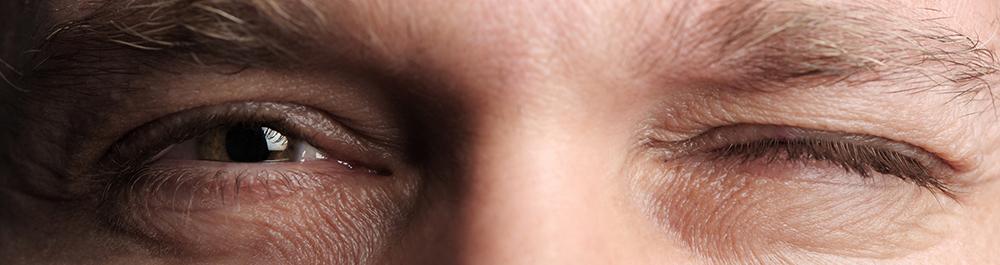
Defining the Cause: Eyelid twitching (or myokymia) is an involuntary spasm of the eyelid muscle that most individuals experience at some point in their life. Though generally harmless, twitching can be disruptive and frustrating, especially when persistent.1 Often, it is the result of the body being in a stressed or fatigued state.2,3
Though uncommon, eyelid twitching may indicate a more serious underlying condition. Evaluation by an eye care physician can help determine the cause and management.
Common Triggers of Eye Twitching
Understanding the underlying cause of an eyelid spasm is an important first step to determine the best management of the condition. The most common causes include:
1. Fatigue2
The body depends on adequate rest to restore and repair itself. When individuals do not get enough sleep, they may become more susceptible to eyelid twitching. Prioritizing sufficient rest is therefore one of the most important steps in minimizing the occurrence of eyelid twitching.
2. Stress2,3
Stress can put strain on the body and cause the eyelid muscle to twitch without control. To help reduce this this potential trigger, try lowering stress throughout the day. Simple activities include taking frequent breaks, practicing deep breathing , or doing activities you enjoy.
3. Use of Alcohol, Tobacco, or Caffeine4
Substances that put stress on the body can increase the chance of eyelid twitching and may also cause other health problems. Cutting back or avoiding these substances may help lower the risk of eyelid twitching.
4. Allergies5
Eye allergies release chemicals called histamines, which can irritate the eye and may cause eyelid twitching. Your eye doctor can recommend treatments, such as antihistamine eye drops, to help relieve allergy symptoms and lower the risk of eyelid spasms.
5. Excessive Digital Device Use6
Spending too much time on digital devices can strain the eyes and may lead to a condition called Computer Vision Syndrome. Eyelid twitching can be one of the symptoms. This is likely linked to dry eyes, eye strain and eye tiredness, which are common triggers for eyelid spasms. CooperVision® MyDay Energys® daily disposable and Biofinity Energys® monthly replacement contact lenses may help with eye tiredness and dryness associated with digital device use.7
7. Poor Nutrition2,8
Vitamins and minerals help muscles work the right way. When the body does not have enough of certain nutrients—such as electrolytes, vitamin B12, vitamin D, or magnesium- eyelid twitching can occur. A primary care doctor can check these levels and recommend treatment if needed.
More serious causes
Most eyelid twitching is harmless and goes away on its own. However, two rare conditions may require more serious evaluation and treatment:
- Blepharospasm:9 This condition affects about 20-50,000 Americans and can cause strong eyelid spasms that may keep the eye closed for hours at a time.
- Hemifacial spasms:10 This is very rare and affects about 8 out of every 100,000 people in the US. It happens when a blood vessel presses on a nerve that controls the facial muscles.
In most cases, minor eyelid twitching will self-resolve without treatment. However, consult your eye doctor right away if the twitch lasts more than a week, causes complete closure of an eyelid, leads to a droopy eyelid, or comes with redness or swelling.
Nothing in this article is to be construed as medical advice, nor is it intended to replace the recommendations of a medical professional. For specific questions, please see your eye care practitioner.
References:
1. Debrowski, Adam. “What Is Ocular Myokymia?” All About Vision, 10 Nov. 2022, https://www.allaboutvision.com/conditions/symptoms/eye-twitching/myokymia/.
2. “Myokymia (Eyelid Twitch or Tic).” American Optometric Association, https://www.aoa.org/healthy-eyes/eye-and-vision-conditions/myokymia/.
3. Roitstein, Carrie. “Stress Can Lead to Negative Effects in the Eyes.” Optometry Times, 2 Jan. 2024, https://www.optometrytimes.com/view/stress-can-lead-to-negative-effects-in-the-eyes.
4. Myokymia: What It Is, Causes, Symptoms & Treatments. Cleveland Clinic, 14 Feb. 2025, https://my.clevelandclinic.org/health/diseases/myokymia. 5. “Allergies.” American Optometric Association, https://www.aoa.org/healthy-eyes/caring-for-your-eyes/allergies.
6. “Computer Vision Syndrome.” American Optometric Association, https://www.aoa.org/healthy-eyes/eye-and-vision-conditions/computer-vision-syndrome/.
7. CVI data on file, 2024.
8. Lazarus, Russel. “Why Is My Eye Twitching?” Optometrists.org, https://www.optometrists.org/general-practice-optometry/guide-to-eye-conditions/guide-to-blurry-vision-and-headaches/digital-eye-strain/why-is-my-eye-twitching/.
9. National Eye Institute. “Blepharospasm.” National Eye Institute, U.S. Department of Health and Human Services, 27 Nov. 2024, https://www.nei.nih.gov/eye-health-information/eye-conditions-and-diseases/blepharospasm.
10. “Hemifacial Spasm (Face Twitching): Symptoms & Treatment.” Cleveland Clinic, 25 July 2025, https://my.clevelandclinic.org/health/diseases/hemifacial-spasm.
19826 05/26