

Your children’s vision helps them see the world, and it plays an important role in their development.1 Issues with your child’s vision can cause challenges in their life—at home, school, during extracurricular activities, sports, and more. But this doesn’t need to be the case: there are answers and solutions to address and treat common eye conditions.
The most common eye conditions for kids
Nearsightedness (also known as myopia) and farsightedness (also known as hyperopia) are two common eye issues for children. These conditions, called “refractive errors,” may require visual correction such as glasses or contact lenses, since they can impact a child’s lifestyle due to blurred vision or possible headaches. These symptoms can cause issues at school, home, or during extracurricular activities like sports and performing arts.
That’s why, if you suspect your child is struggling with an eye condition like nearsightedness or farsightedness, you’ll feel a sense of urgency to get them help, knowing that their blurry or inconsistent vision can affect every part of their daily life.
Eye conditions can be hard for parents to detect, so it’s important to regularly have your child’s eyes examined by an eye care professional to ensure they aren’t struggling with their vision.
Nearsightedness (also known as myopia)
Myopia is a condition that makes it difficult to see things clearly in the distance. You’ve likely heard it called nearsightedness or shortsightedness because myopic eyes can see close-up more easily. If your child has to squint to see things farther away, it could be due to myopia.
Myopia occurs when the eye is growing faster than it should and longer than it should. When that happens, the eye becomes weaker, leading to possible eye health problems affecting vision.2
For clear vision, light must focus directly on the tissue that lines the back of the eye, called the retina. Since the eye is longer with myopia, light instead focuses in front of the retina, which causes a blurry image when viewing objects in the distance. This is like when a camera is out of focus.
The number of people with myopia has been climbing for decades. In the early 1970s, the prevalence of myopia in the U.S. was around 25%.2 By 2000, that number had exceeded 40% and continues to rise.3 In fact, experts predict myopia will affect nearly 50% of North America’s population by 2030.4
Farsightedness (also known as hyperopia)
Another common eye condition is farsightedness, also known as hyperopia, which is the opposite of nearsightedness. Farsightedness is when you can see distant objects more clearly, but close-up objects may be blurry.5 Farsightedness is due to the eye being shorter, so light lands behind the retina out of focus.6
The degree of your farsightedness influences your focusing ability. People with severe farsightedness may be able to see distant objects clearly, while those with mild farsightedness may be able to clearly see objects at all distances.5 Farsightedness is a refractive error that can impact focusing during near activities and can lead to symptoms such as blurred vision, tired eyes, or headaches.
There are other common vision problems among children as well, like amblyopia (lazy eye), strabismus (inward or outward eyes), and convergence insufficiency,1 all of which can impact your child's vision and quality of life. So it is important to take your child for a comprehensive eye examination with an eye doctor, even if you do not see any signs of a problem.
Signs and symptoms of vision problems
It is important to note that many young children have no signs or symptoms of poor vision, so you will not want to rely on them to notice and report concerns to you. There are some potential signals that your child may be having some challenges with their vision, even if they don't realize it.
Here are common signs and symptoms of vision problems, specifically nearsightedness:
- Complaints of blurry vision7
- Squinting to try to see better7
- Frequent eye rubbing7
- Frequent headaches7
- Holding objects very close8
- Sitting very close to the TV8
- Covering an eye8
- Fatigue
- Holding books, toys, or other objects closer to their face than usual9
- Blinking a lot9
Some nearsightedness symptoms are the same for farsightedness, like eye strain, fatigue, and/or headaches (after periods of close work). Symptoms unique to farsightedness include having difficulty concentrating and maintaining a clear focus on near objects, aching eyes, and irritability or nervousness after sustained concentration.6
Many young children have no signs or symptoms of poor vision, so you will not want to solely rely on them to notice and report concerns to you. There are some potential signals that your child may be having some challenges with their vision, even if they don't realize it.
Find the right solution to your child’s eye problem
If you suspect your child is struggling with any of these conditions, it’s time to make an appointment with an eye doctor for a comprehensive eye exam. Regular eye exams and consultation with your eye doctor or an optometrist that specializes in kids’ eyesight are the best ways for your child to maintain good eye health and minimize the risk of potential problems.
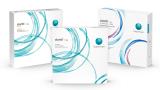
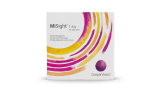
If your child is diagnosed with myopia, your doctor may prescribe MiSight® 1 day, an FDA-approved contact lens designed for myopia control that both corrects vision and slows the progression of myopia in children aged 8-12 at the initiation of treatment.†*10 They are the only dual-purpose contact lenses for children to correct vision and help keep nearsightedness from getting worse quickly. †10
You can find an eye doctor who prescribes MiSight® 1 day and start your free trial of MiSight® 1 day contact lenses.
In the meantime, it’s important that you have your child take breaks from screens for at least 10 minutes and spend time outdoors as much as possible. It's important to note that while these recommendations can be beneficial for your child's eye health, they are not a substitute for professional eye care.
Sign up to learn more about MiSight® 1 day.


