



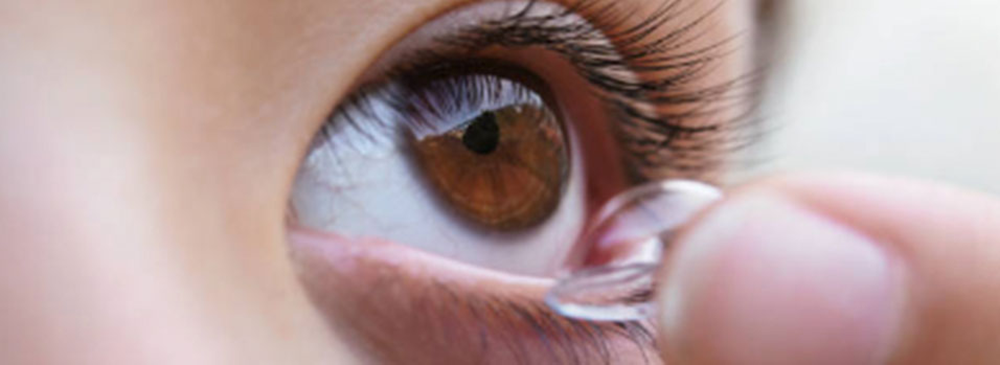
If your child has been diagnosed with myopia, or even if you suspect that he or she has blurred vision or other symptoms, then you may have started considering possible solutions, including contact lenses. But are they ready? And even more important, are contacts safe for them to wear at their age?
Childhood myopia is a problem that an increasing number of parents face. Also known as nearsightedness, it affects more people every year. There are already an estimated 2.6 billion people with myopia worldwide. But by 2050 nearly half the world’s population, or 5 billion, will likely have myopia. And when it comes to the U.S., about 4 in 10 Americans are nearsighted. That’s an increase of 25% over the numbers in 19711 — a change likely brought on by lifestyle changes, including an increase in the amount of time we all spend indoors.
The good news for all those young kids facing blurred vision, both now and in the future, is that contact lenses are a safe option for vision correction. Studies have shown that kids as young as 8 years old can successfully wear daily disposable soft contacts.2 One study that tracked lens wearers for more than a decade found that “successful contact lens wearers fit as children are no more likely to report previous contact lens-related adverse events, problems with compliance, decreased wearing time, or worse ocular health than those fit as teenagers, so practitioners should not use age as a primary determinant in fitting children in contact lenses.”3
Another study even found that the number of cornea problems was “markedly” lower in children ages 8 to 11 than it was in adults.4
Of course, studies are about averages. What about your child? Is he or she ready for contacts?
Here are a few questions to ask to help decide whether your child is ready to be fitted and to start thinking about how to create a successful experience with contact lenses if they are ready:
Assess: Is your child responsible enough?
It’s time to take a step back and think about whether your child is ready for contacts and how wearing them would fit into their life. Does your child keep their room clean and remember daily responsibilities, for the most part? Are they usually good at keeping track of things, including schedules? If so, they are likely ready for the daily care that contacts require.
What kind of contact lenses work best?
It wasn’t so long ago that lens wearers needed to keep track of their lens from day to day. They weren’t disposable — you wore the same ones each day for a whole week or even longer. Contact lens technology has changed a great deal since then, of course, and for most users, especially children, daily disposable lenses are the way to go. Not only do wearers not need to worry about cleaning, storing, and disinfecting their contacts after they remove them, but it’s also not as big a deal if they lose a lens or two here or there along the way. There will always be another fresh pair ready for the next day.
Is it worth it?
Getting contact lenses takes some effort from parents as well as from the kids getting them, including the regular checkups your child will need to have with their eye care professional. But most families find that any initial time investment vs. hassle is more than worth it. Kids usually find that they are happier wearing contacts. In one study, kids wearing contacts instead of eyeglasses self-reported the following feelings:5
- Felt more competent when participating in sports and other physical activities
- Felt better about their appearance
- Felt better about fitting in with their friends
Can contacts actually keep my child’s myopia from getting worse?
Some can.
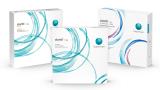
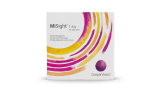
MiSight® 1 day contact lenses are the first and only FDA-approved* soft contact lenses proven to slow the progression of myopia in children, aged 8-12 at the initiation of treatment† They slow down the progression of myopia in children (aged 8-12 at the initiation of treatment) by an average of 59%6† — something that traditional eyeglasses can’t do.
There are many aspects to the contact lens question that require making decisions as a family. But whatever decision you make right now, you can be sure that contacts are a safe and viable option for correcting nearsightedness in children as well as adults.
Sign up to learn more about MiSight® 1 day.


