

Olivia and Madeline’s Story
Olivia and Madeline are seeing the world together
Valerie and Greg always knew their 8-year-old twins, Olivia and Madeline, might develop myopia – the medical term for nearsightedness—because they did as children. Myopia tends to run in families, and the chances of a child developing myopia increases 6x when both parents have the condition.1 “It was always a challenge,” says Valerie, remembering their childhood struggle with myopia. So naturally when the twins started having a hard time seeing the clock from the living room, the parents worried how this might affect the twins, who are both in dance and gymnastics, and live active lives.
Myopia is the condition in which the eyeball is longer than it should be, or the cornea is curved too steeply. Instead of focusing precisely on the retina, light focuses in front of the retina, resulting in blurry distance vision.2 The end result is nearsightedness. This can easily be rectified with corrective eyeglasses, which Greg and Valerie assumed their girls would have to wear. However, they discovered they had other options that would not only correct their vision but would help to slow the progression of their myopia.
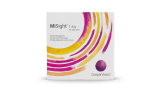
Their ECP prescribed MiSight® 1 day contact lenses by CooperVision®. These daily disposable lenses are specially designed for myopia control and are FDA approved* to slow the progression of myopia in children aged 8-12 at the initiation of treatment.†3 The lenses offer a level of ease that both parent and child can take comfort in. After doing his research, Greg saw MiSight® as a “very approachable solution to the problem” that would allow his girls to continue with their hobbies as normal. Both daughters have adapted to wearing the lenses smoothly, putting them in themselves without any assistance. But for Madeline the most exciting thing about the lenses is “to be able to see better”.3-5
A key benefit of MiSight® is that these lenses help slow the progression of myopia†3 which will have a positive impact in the future of children’s eye health. Greg and Valerie wanted to give their daughters a better outcome when it came to their eyesight than they had, so they jumped at the opportunity to try MiSight® when their MiSight®-certified eye care doctor offered the lenses to them. “The studies showed that it did slow the progression of their myopia,” says Valerie, “I wanted to give them that advantage.”
Learn more at the Myopia Blog

What is myopia? Causes, warning signs, risks and solutions
If you’ve heard of myopia, you probably already know it has something to do with vision—even if you’re unsure exactly what it is. Myopia is a common vision condition in children...

MiSight® 1 day vs. Single Vision Contact Lenses: Why Parents are Choosing a Contact Lens that Does More
If your child has been diagnosed with myopia (nearsightedness), you’ve probably already noticed how quickly prescriptions can change. 1 Not all contact lenses work the same way...
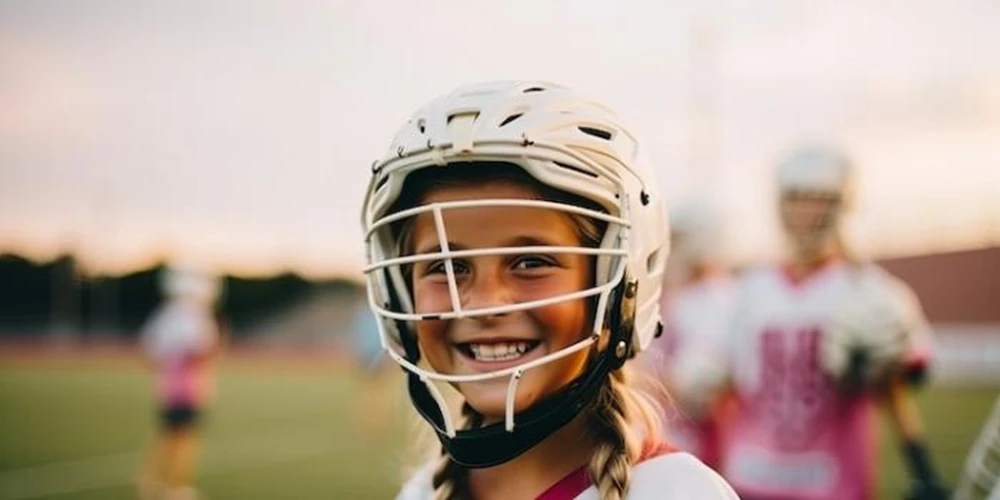
The Winning Edge: How Contact Lenses Can Boost Young Athletes' Vision and Performance
Clear vision is essential for young athletes when it comes to their ability to perform in sports and their active lifestyles. MiSight® 1 day contact lenses for myopia control...
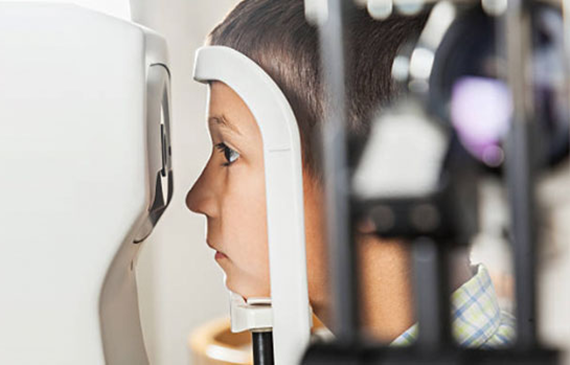
What are the Risks of High Myopia?
The blurred vision that comes with nearsightedness, also known as myopia, can sometimes be little more than an inconvenience. But in some cases, it can also put your eye health at...
*INDICATIONS AND BRIEF SAFETY INFORMATION for MiSight® 1 day soft contact lens:
INDICATIONS:
MiSight® 1 day (omafilcon A) Soft (Hydrophilic) Contact Lenses for Daily Wear are indicated for the correction of myopic ametropia and for slowing the progression of myopia in children with non-diseased eyes, who at the initiation of treatment are 8-12 years of age and have a refraction of -0.75D to -4.00D (spherical equivalent) with ≤ 0.75 diopters of astigmatism. The lens is to be discarded after each removal.
BRIEF SAFETY INFORMATION: Rx only; results may vary.
ATTENTION: Reference the Patient Information Brochure or visit misight.com/safety for a complete listing of Indications and Important Safety Information.
WARNINGS: Problems with contact lenses could result in serious injury to the eye. Do not expose contact lenses to water while wearing them. Under certain circumstances, MiSight® lenses’ optical design can cause reduced image contrast/ghosting/halo/glare in some patients that may cause difficulty with certain visually demanding tasks.
PRECAUTIONS: Daily wear single use only. Patient should always dispose when lenses are removed. No overnight wear. Patients should exercise extra care if performing potentially hazardous activities.
ADVERSE EVENTS: Including but not limited to infection/inflammation/ulceration/abrasion of the cornea, other parts of the eye or eyelids. Some of these adverse reactions can cause permanent or temporary loss of vision. If you notice any of the stated in your child, immediately have your child remove the lenses and contact your eye care professional.
References:
- Mutti DO, Mitchell GL, Moeschberger ML, Jones LA, Zadnik K. Parental myopia, near work, school achievement, and children's refractive error. Invest Ophthalmol Vis Sci. 2002;43(12):3633-3640. doi:10.1001/jamaophthalmol.2020.0412.
- https://www.mayoclinic.org/diseases-conditions/nearsightedness/symptoms-causes/syc-20375556.
- Chamberlain P, et al. A 3-year randomized clinical trial of MiSight® lenses for myopia control. Optom Vis Sci. (2019); 96(8):556-567.
- Sulley A et al, Wearer experience and subjective responses with dual focus compared to spherical, single vision soft contact lenses in children during a 3-year clinical trial. AAO 2019 Poster Presentation.
- Chamberlain P et al, Further comparison of myopia progression in new and established myopia control treatment (MiSight® 1 day) groups. BCLA paper presentation 2019.
12362