

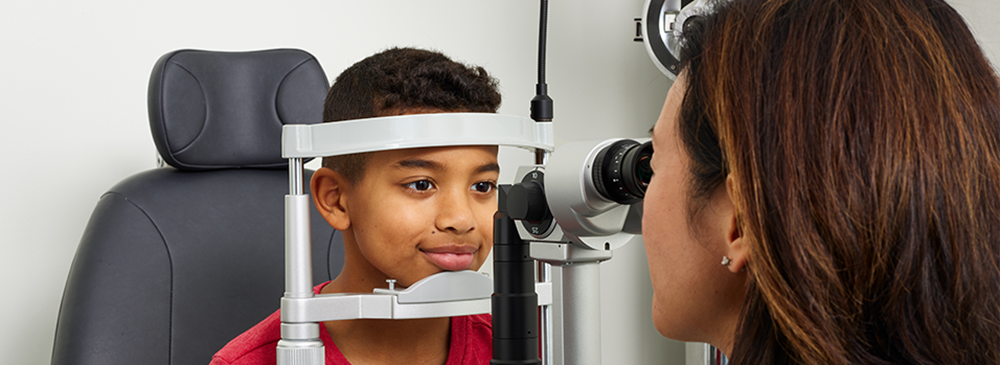
Nearsightedness, also known as shortsightedness, refers to the eye condition when objects in the distance appear blurry. You’re able to more easily see things that are close to you. Eye doctors usually call this condition “myopia” rather than nearsightedness or shortsightedness. If you find yourself squinting when you look at things in the distance but are able to more easily see things up close, then you are likely nearsighted.
The Causes of Myopia
There’s no single cause for myopia. It has both genetic1 and lifestyle2,3,4 components that contribute to the eye growing longer than it should. For instance, myopia does tend to run in the family. Children are more likely to have myopia if their parents do, and identical twins, who share the same genes, are more likely to have myopia than nonidentical twins.1
But genetics isn’t the whole story. The amount of people with nearsightedness has been rising for decades—much faster than evolution could account for. At the start of the 1970s, for instance, the prevalence of myopia in the United States was just 1 in 4. Thirty years later, around 2000, that number has exceeded 40%5 and will likely continue to rise. The World Health Organization estimates that half of the world’s population will have myopia by 2050.
So what caused our myopia rates to shoot up so quickly? Some believe it’s due to gradually less time outdoors exposed to bright light over those 30 years. Working closely on computers and other devices that demand close-up focusing is also believed to increase myopia rates.2,3,4
An important note: Myopia can also be a sign of something more serious, including diabetes. So it’s important to have regular medical checkups to help rule out such causes.
The Pandemic Effect
The pandemic caused children’s rates of myopia to climb even higher, probably because they were forced to remain indoors more than they ever had before. A research study published in July of 2021 found that children aged 6 to 8 in China had an increased prevalence of myopia by 36%, presumably from less time outside during the pandemic.
“Our results serve to warn eye care professionals, and also policy makers, educators and parents,” wrote the researchers, “that collective efforts are needed to prevent childhood myopia—a potential public health crisis as a result of COVID-19.”6
When Does Nearsightedness Start?
Myopia tends to appear in kids from age 5 to 14, as their eyes, brains, and heads begin to grow to the size they’ll be when they are adults. That is also the time when myopia progression should be slowed as much as possible.
Given that the rate of nearsightedness among kids is unlikely to go down on its own, what can be done to help your own child’s eyes? Limiting screen time is one sensible strategy.7
It’s also important to make sure kids get lots of time outside.7 Why does spending time outdoors help? It is likely because the bright light outdoors even on a cloudy day releases dopamine in the outer retina which regulates eye growth.8
Contact Lenses That Are Part of the Solution
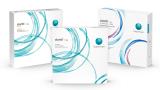
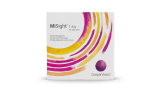
There’s now another way to help ward off myopia progression in kids. In the past, contact lenses were only able to clear up vision, but now some can go beyond vision correction. MiSight® 1 day soft contact lenses are specifically designed for myopia control and are FDA approved* to slow the progression of myopia in children aged 8-12 at initiation of treatment.9† Although these daily, single-use lenses help your child to see,9, 10,11 they also help keep their myopia from getting worse too quickly.9† Whether they are worn in class, while playing sports, or just hanging out with friends, MiSight® will help your child see clearly while reducing the risk of myopia-related eye health complications over the long term.12
Sign up for new information about MiSight® 1 day.
* INDICATIONS AND BRIEF SAFETY INFORMATION for MiSight® 1 day soft contact lens:
INDICATIONS:
MiSight® 1 Day (omafilcon A) Soft (Hydrophilic) Contact Lenses for Daily Wear is a prescription device indicated for the correction of nearsightedness and for slowing the progression of nearsightedness in children with non-diseased eyes, who at the initiation of treatment are 8-12 years of age and have a refraction of -0.75 to -4.00 diopters (spherical equivalent) with ≤ 0.75 diopters of astigmatism
BRIEF SAFETY INFORMATION:
Rx only; results may vary.
ATTENTION: Reference MiSight.com/safety for a complete listing of Indications and Important Safety Information.
INDICATIONS: MiSight® 1 day (omafilcon A) soft (hydrophilic) contact lenses for daily wear are indicated for the correction of myopic ametropia and for slowing the progression of myopia in children with non-diseased eyes, who at the initiation of treatment are 8-12 years of age and have a refraction of -0.75 to -4.00 diopters (spherical equivalent) with ≤ 0.75 diopters of astigmatism. The lens is to be discarded after each removal.
WARNINGS: Problems with contact lenses could result in serious injury to the eye. Do not expose contact lenses to water while wearing them. Under certain circumstances MiSight® lenses optical design can cause reduced image contrast/ghosting/halo/glare in some patients that may cause difficulty with certain visually-demanding tasks.
PRECAUTIONS: Daily wear single use only. Patient should always dispose when lenses are removed. No overnight wear. Patients should exercise extra care if performing potentially hazardous activities.
ADVERSE EVENTS: Including but not limited to infection/inflammation/ulceration/abrasion of the cornea, other parts of the eye or eyelids. Some of these adverse reactions can cause permanent or temporary loss of vision. If you notice any of the stated in your child, immediately have your child remove the lenses and contact your eye care professional.
‡‡ National rebate: *Available on purchases between 1/1/26-12/31/26. Must submit rebate form within 60 days of lens purchase.
†Compared to a single vision 1 day lens over a 3 year period.
‡Fitted at 8-12 years of age at initiation of treatment.
References:
1Mutti DO, Mitchell GL, Moeschberger ML, Jones LA, Zadnik K. Parental myopia, near work, school achievement, and children's refractive error. Invest Ophthalmol Vis Sci. 2002;43(12):3633-3640. doi:10.1001/jamaophthalmol.2020.0412.
2Xiong S, Sankaridurg P, Naduvilath T, Zang J, Zou H, Zhu J, Lv M, He X, Xu X. Time spent in outdoor activities in relation to myopia prevention and control: a meta-analysis and systematic review. Acta Ophthalmol. 2017 Sep;95(6):551-566. doi: 10.1111/aos.13403. Epub 2017 Mar 2. PMID: 28251836; PMCID: PMC5599950.
3Huang HM, Chang DS, Wu PC. The Association between Near Work Activities and Myopia in Children-A Systematic Review and Meta-Analysis. PLoS One. 2015 Oct 20;10(10):e0140419. doi: 10.1371/journal.pone.0140419. PMID: 26485393; PMCID: PMC4618477
4Lanca C, Saw SM. The association between digital screen time and myopia: A systematic review. Ophthalmic Physiol Opt. 2020 Mar;40(2):216-229. doi: 10.1111/opo.12657. Epub 2020 Jan 13. PMID: 31943280.
5“Why Nearsightedness Is on the Rise in Children,” The New York Times, May 3, 2021.
6“Myopia incidence and lifestyle changes among school children during the COVID-19 pandemic: a population-based prospective study,” British Journal of Ophthalmology, August 2, 2021.
7CVI data on file 2019. Global survey by Decision Analyst with 402 ECPs in UK, Canada, Germany, Spain, Hong Kong, Australia/NZ.
8McCarthy CS, Megaw P, Devadas M, Morgan IG. Dopaminergic agents affect the ability of brief periods of normal vision to prevent form-deprivation myopia. Exp Eye Res 2007;84:100-7.
9Chamberlain P et al. A 3-year Randomized Clinical Trial of MiSight® Lenses for Myopia Control. Optom Vis Sci. 2019;96(8):556-567.
10Sulley A et al, Wearer experience and subjective responses with dual focus compared to spherical, single vision soft contact lenses in children during a 3-year clinical trial. AAO 2019 Poster Presentation.
11Chamberlain P et al, Further comparison of myopia progression in new and established myopia control treatment (MiSight® 1 day) groups. BCLA paper presentation 2019.
12Tideman JW et al. Association of axial length with risk of uncorrectable visual impairment for Europeans with myopia. JAMA Ophthalmol. 2016;134:1355-1363.