



A lot of children and adults have astigmatism, which is a light-focusing issue like nearsightedness (myopia) and farsightedness (hyperopia). In fact, you can think of astigmatism as two levels of nearsightedness in the same eye, and a child with astigmatism will see streaking of lights and blurry images at all distances.
According to a study funded by the National Institutes of Health, about 4% of preschoolers have myopia (nearsightedness), 21% have hyperopia (farsightedness) and 10% have astigmatism (irregular curvature of the eye).1
When looking at astigmatism vs. myopia, both conditions can be mostly addressed by glasses, contact lenses and laser eye surgery to restore clear vision, at least temporarily.
What does it mean to be nearsighted (or myopic)?
Myopia, or nearsightedness, is when a person can’t see far-away objects clearly.2 This occurs when the cornea is curved too much or the eye is longer than usual. Instead of being focused precisely on the retina, light is focused in front of the retina, making distant objects seem blurry.3
What does it mean to have astigmatism?
Astigmatism is when there are different prescriptions (different levels of nearsightedness) in the same eye. A child with astigmatism will see streaking of lights and blurry images at all distances. They may have headaches, eye strain and trouble seeing at night.4
You may have seen social media content of nighttime lights streaking in a certain direction. That’s often because of astigmatism—when the front of the eye, called the cornea, isn’t perfectly round like a ball but more football-shaped. This makes light focus on the retina at two different points instead of just one.
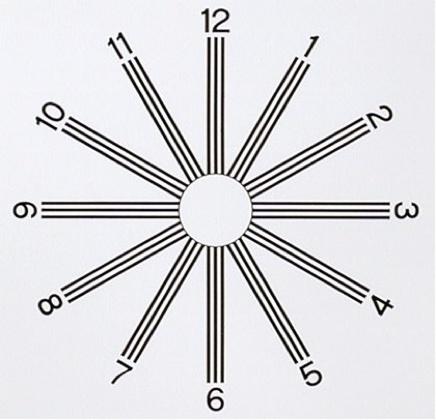
Now it’s your turn: Cover one eye at a time and look at this clock dial. If one set of lines appears darker than the other, you likely have uncorrected astigmatism.
Is astigmatism common?
Astigmatism is a very common eye problem that can make your vision blurry or distorted. The only way to confirm you have astigmatism is to get an eye exam with an eye care professional.4
Can astigmatism get worse?
Astigmatism often stays stable in children past the age of 2 or 3, even as they grow—unlike myopia, which continues to get worse, often prior to seventh grade.5 There are certain exceptions. A condition called keratoconus can cause astigmatism to aggressively worsen in the late teenage years and early 20s.6 Experts used to think keratoconus happens to one in 2,000 people, but now believe it’s closer to one in 500, and possibly even a bit more.6
How is astigmatism different from myopia?
Astigmatism and myopia are similar, and both can affect vision, but there are some key differences between the two, including:2
Eye shape
While astigmatism is caused by a different cornea (or lens) shape, myopia occurs when the eye itself has either grown too long or the cornea is curved too steeply to properly focus light on the retina.2 In both cases, vision is affected by the eye having a different shape.
Vision symptoms
Both astigmatism and myopia can cause blurry vision at a distance, but astigmatism also may cause blurry vision up close. Children with mild astigmatism and myopia get by just fine, but worsening myopia makes children more and more dependent on their glasses or contact lenses to function in everyday life.
Prevalence and long-term risks
Astigmatism, farsightedness (hyperopia) and nearsightedness (myopia) are the most common refractive errors.7 They’re known to run in families and are seen in 15% of children, and while the prevalence of astigmatism and myopia varies throughout the world, debilitating astigmatism is less common, while myopia often progresses and can lead to further vision problems.2,8
Can astigmatism or myopia cause blindness?
Parents may be asking: Can myopia cause blindness? Can astigmatism cause blindness?
Astigmatism, even in high amounts, does not lead to blindness. Myopia in some cases can lead to blindness when the stretching of the eye, due to accelerated growth, causes permanent compromise to the retina (the inner lining of the eye).9
The life-long impacts of eye issues for your child
Your child’s vision helps them see the world, and it plays an important role in their development.10 Issues with their vision can cause challenges at home, at school, during extracurricular activities and sports, and more.11
Understanding treatment options for your child
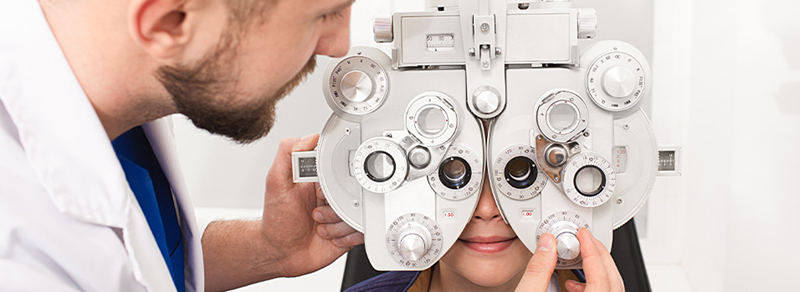
If you suspect your child is struggling with one of these conditions, it’s time to make an appointment with an eye doctor for a comprehensive eye exam. Regular eye exams and consultation with your eye doctor or an optometrist who specializes in kids’ eyesight are the best ways to maintain good eye health and minimize the risk of potential problems.
If your child is diagnosed with myopia, your doctor may prescribe MiSight® 1 day, the only FDA-approved* contact lens designed for myopia control that both corrects vision and slows the progression of myopia in children aged 8-12 at the initiation of treatment.†12 They’re the only dual-purpose contact lenses for children to correct vision and help keep nearsightedness from getting worse quickly.†12
You can find a MiSight® eye doctor and start your free trial of MiSight® 1 day contact lenses.
Sign up to learn more about MiSight® 1 day.


