

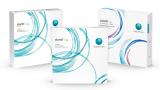

contacts curious?
If you’ve never tried contact lenses, it’s natural to have a little lensxiety. The good news: You’re about to make a new friend.
Ask your eye doctor for clariti® 1 day.
Made for first-timers.*1,2

Your lensxiety has questions. clariti® has answers.
Everyone who wears contacts was a first-timer once. Will it feel a little weird to touch your eye? Maybe at first, but that goes away quickly. Here are some green flags about clariti® to put your mind at ease.
“How will I know which is the right way up?”
It comes out of the package right-way-up 99% of the time.§2 No guessing, flipping or fumbling.
“What if I can’t get it in my eye? Or out?”
Getting it in is easy. Getting it out? Also easy. 93% found clariti® 1 day contacts easy to put in and take out.3
“Will it be comfortable?”
Yessss. clariti® is comfortable the first time and every time.4
“What about cases and cleaning solution?”
clariti® is a daily contact lens, so you wear a fresh pair every day. But you should always have some solution on hand, just in case.
Also this: Even the package opens on the first try.*1,2
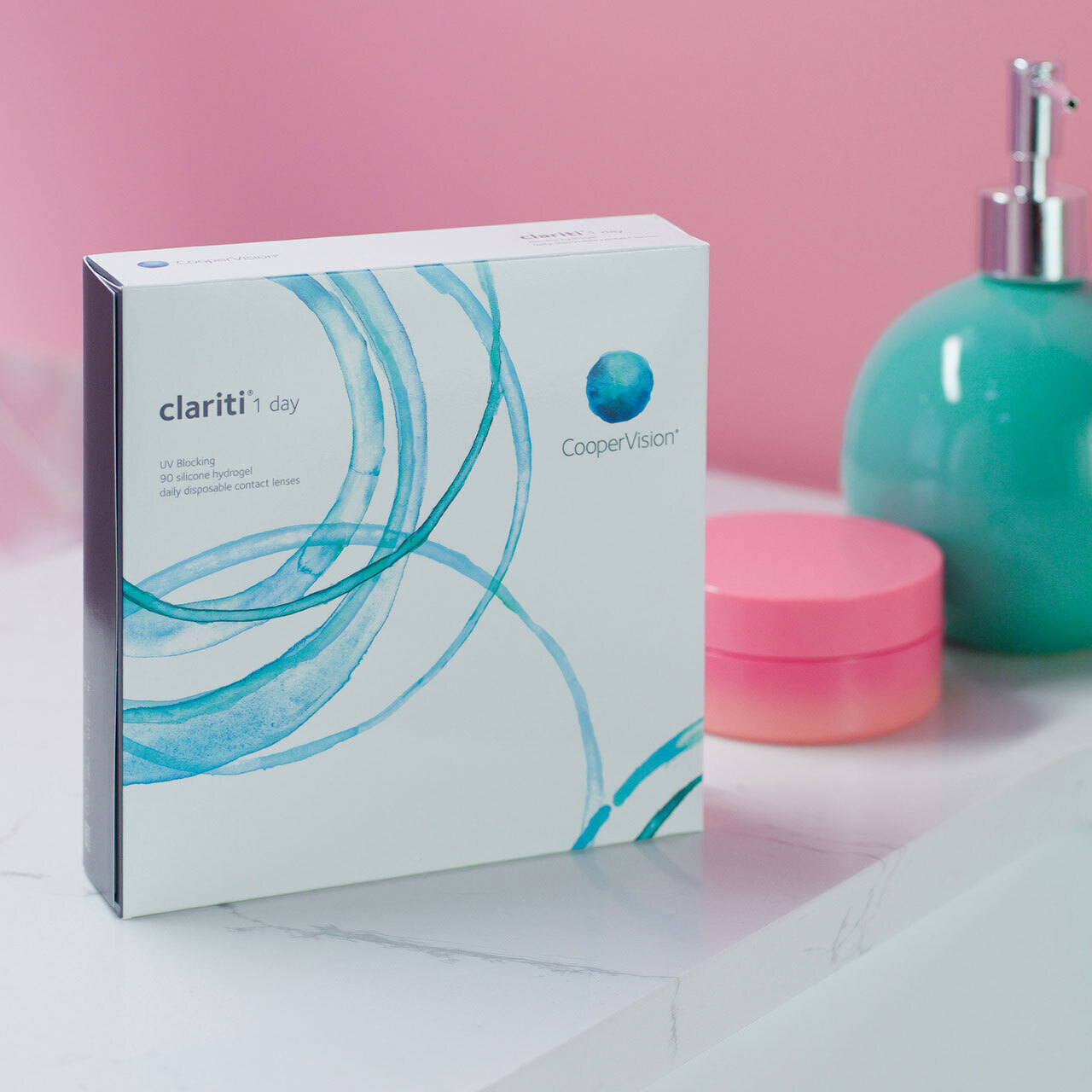
Get to know your new lens friend.
clariti® 1 day is a daily contact lens designed for new contact lens wearers.*1,2 You put in a fresh pair every morning and toss them every night. Here are the benefits in between:
All-day comfort3
Made from a material that naturally holds onto moisture,5 so your lenses stay comfortable—from your morning matcha to final scroll. (BTW, 88% of clariti® wearers agree.3)
Breathable6
The contact lens material lets oxygen through for white, bright eyes.
Built-in UV blocker†
Helps block UVA and UVB rays.† (Keep the sunglasses, too, though.)
Comes in:
clariti® 1 day
clariti® 1 day toric for astigmatism
It’s easy to get started in clariti®.*1,2 Here’s how.
Ready to start your contact lens journey? Good news, Odysseus: It’s shorter than you think.
Book a contact lens exam
Mention you want to try contacts when you book your appointment. Your eye doctor handles the rest.
Ask for clariti® 1 day
By name. It’s made for first-timers.*1,2
Get your rebate‡
One tap. Quick form. You get free trial lenses AND the rebate—2 for 1. Scroll to start.
Your first pair, a little easier on the wallet.
Get $175‡ back on your first clariti® 1 day purchase. Fill out the form to claim your free trial and download your rebate today.
Things you may be too embarrassed to look up.
Does it hurt to wear contacts?
A lot of people wonder about that. Truth is, it may just feel different or new at first.
Can a contact lens get lost behind my eye?
Your eyelid’s lining is tucked all the way around, like a fitted sheet. So no, it can’t get back there.
What if I can’t get it out?
Your eye doctor’s office will show you how to insert and remove your contact lenses before you leave with your first pair.
Can I sleep in them?
Nope. clariti® 1 day is a daily disposable lens: Wear them during the day, toss them at night and start fresh tomorrow.
Can I still wear my glasses sometimes?
Totally. Lots of people switch between glasses and contacts. With daily disposable lenses, you just open a fresh pair whenever you want to wear them.
I’ve been told I have astigmatism. Can I wear contacts?
Many people with astigmatism can wear contact lenses. Your eye doctor will check what’s right for you.
Do I need a special eye exam for contacts?
Yes. A contact lens exam checks how lenses fit your eyes. Just mention contacts when you book your appointment.
What will it cost? Is it covered?
It depends on your vision plan. Your eye doctor’s office can tell you what’s covered, and your rebate helps with the rest.
Ask your eye doctor for clariti® 1 day.
For product and safety information, visit coopervision.com/safety.
† WARNING: UV-blocking contact lenses help provide protection against transmission of harmful UV radiation to eye but are not substitutes for protective UV-absorbing eyewear, such as UV absorbing goggles or sunglasses, as they do not completely cover the eye or surrounding area. Continue to use UV-absorbing eyewear as directed by your eye care professional.
NOTE: Long-term exposure to UV radiation is one of the risk factors associated with cataracts. Exposure is based on a number of factors, such as environmental conditions (altitude, geography, cloud cover) and personal factors (extent and nature of the outdoor activities). UV-absorbing contact lenses help provide protection against harmful UV radiation. However, clinical studies have not been done to demonstrate that wearing UV-absorbing contact lenses reduces the risk of developing cataracts or other eye disorders. Consult your Eye Care Practitioner for more information.
* Blister lens position, blister opening, lens retrieval. Handling overall, application and removal ratings.
‡ Rebate values subject to change. Rebate valid for purchases through 12/31/26 subject to all rebate terms and conditions. See manufacturer’s rebate form for more details.
§ 99% not inverted or everted.
References:
- CVI data on file, 2019. Multi-visit study to assess handling performance in habitual SCL wearers, n=19.
- CVI data on file, 2025. Lens orientation and eversion stability study in clariti® 1 day blisters.
- CVI data on file, 2019. clariti® 1 day Wearer Experience Survey conducted online in US, n=298: sphere, toric or multifocal; habitual FRP, DD and new wearers who purchased clariti® 1 day; strongly or somewhat agree.
- CVI data on file, 2018. Observational satisfaction survey in France, n=1718.
- CVI data on file, 2024.
- Brennan NA. Beyond Flux: Total Corneal Oxygen Consumption as an Index of Corneal Oxygenation During Contact Lens Wear. Optom Vis Sci. 2005;82(6):467-472.
Indications and Important Safety Information for daily disposable soft contact lenses (stenfilcon A, somofilcon A):
(a) Indications
CooperVision® daily disposable soft contact lenses are prescription devices indicated for daily wear,
single-use vision correction as prescribed by an Eye Care Practitioner. The lenses are intended for wear
in persons with non-diseased eyes.
Daily disposable contact lenses are intended to be worn for one day and are not intended for cleaning or re-use. On removal, the lenses should be thrown away and a fresh pair used each day.
Daily wear lenses are not indicated for overnight wear, and patients should not wear lenses while sleeping.
(b) Important Safety Information
Problems can occur while wearing soft contact lenses that may result in serious injury to the eye. Proper
use of contact lenses is essential for the safe use of these products. Follow your Eye Care Practitioner’s
directions and all labeling instructions for proper use of lenses. Eye problems, including corneal ulcers,
can develop rapidly and lead to loss of vision.
(i) Who Should Not Use Soft Contact Lenses
Do not use your contact lenses when any of the following conditions exist:
Acute and subacute inflammation or infection of the anterior chamber of the eye.
Any eye disease, injury or abnormality that affects the cornea, conjunctiva or eyelids.
Severe dry eye.
Reduced corneal sensitivity (corneal hypoesthesia).
Any systemic disease that may affect the eye or be exaggerated by wearing contact lenses. For example Sjogren’s syndrome, rheumatoid arthritis, lupus and collagen vascular diseases affect your ability to wear contact lenses.
Allergic reactions of ocular surfaces or surrounding tissues (adnexa) that may be induced or exaggerated by wearing contact lenses or use of contact lens solutions.
An allergic reaction can occur to any ingredient in contact lens solutions. Example: Some people are allergic to the trace amounts of mercury or thimerosal included as an active ingredient in some contact lens solutions.
Any active corneal infection (bacterial, fungal or viral).
If eyes become red or irritated.
If you are unable to follow lens care regimen or unable to obtain assistance to do so.
(c) Warnings and Precautions
(i) Water Activity
Do not expose your contact lenses to water while wearing them.
Water may contain microorganisms (germs) that can lead to severe infection, vision loss or blindness. After swimming in pools, lakes or oceans, you should discard them and replace them with a new pair.
Ask your Eye Care Practitioner for recommendations about wearing the lenses during any activity involving water.
(ii) Handling Precautions
Do not use if the sterile blister package is opened or damaged.
Always wash and rinse hands before handling lenses. Do not get cosmetics, lotions, soaps, creams, deodorant or sprays in the eyes or on the lenses. It is best to insert lenses before putting on makeup. Water-based cosmetics are less likely to damage lenses than oil-based products.
Lens contamination may occur if you handle your lens with dirty hands.
Carefully follow the handling, insertion, removal and wearing instructions prescribed by your Eye Care Practitioner.
Always handle lenses gently and avoid dropping them.
Never use tweezers or other tools to remove lenses from the lens container. Pour the lens and packaging solution into your hand.
Do not touch the lens with fingernails.
(iii) Lens Wearing Precautions
Never wear your lenses beyond the period recommended by your Eye Care Practitioner.
If aerosol products such as hairspray are used while wearing lenses, be careful and keep eyes closed until the spray has settled.
Avoid all harmful or irritating vapors and fumes while wearing lenses.
Ask your Eye Care Practitioner about wearing the lenses during sporting activities.
Always discard lenses following the recommended replacement schedule prescribed by your Eye Care Practitioner.
(iv) Who Should Know That You Are Wearing Contact Lenses
Inform your doctor (health care practitioner) that you wear contact lenses.
Always inform your employer that you wear contact lenses. Some jobs may require use of eye protection equipment or may restrict contact lens wear.
Always contact your Eye Care Practitioner before using any medicine in your eyes.
(v) Other Topics to Discuss with Your Eye Care Practitioner
Follow-up visits are necessary to assure the continued health of your eyes. You should be instructed to a
recommended follow-up schedule.
(vi) UV Blocker
UV-absorbing contact lenses are NOT substitutes for protective UV-absorbing eyewear such as UV-absorbing
goggles or sunglasses because they do not completely cover the eye and surrounding area.
Persons should continue to use their protective UV-absorbing eyewear as directed.
Long-term exposure to UV radiation is one of the risk factors associated with cataracts. Exposure is based on a number of factors such as environmental conditions (altitude, geography, cloud cover) and personal factors (extent and nature of the outdoor activities). UV-absorbing contact lenses help provide protection against harmful UV radiation. However, clinical studies have not been done to demonstrate that wearing UV-absorbing contact lenses reduces the risk of developing cataracts or other eye disorders. Consult your Eye Care Practitioner for more information.
(vii) What are Key Complications Associated With Contact Lens Wear?
Be aware that the following problems may occur when wearing contact lenses:
Your eyes may burn, sting and/or itch or you may experience other eye pain.
Comfort may be less than when the lens was first placed on the eye.
There may be a feeling that something is in the eye such as a foreign body or a scratched area.
There may be excessive watering (tearing), unusual eye secretions or redness of your eye.
Reduced sharpness of vision (poor visual acuity).
Blurred vision, rainbows or halos around objects, sensitivity to light (photophobia) or dry eyes may also occur if your lenses are worn continuously or for too long a time.
If you notice any of the above, you should:
Immediately remove the lenses.
If the discomfort or the problem stops, then look closely at the lens.
If the lens is in some way damaged, do not put the lens back on the eye. You should discard the lens and insert a fresh lens on your eye.
If the problem continues, you should immediately remove the lenses and consult your Eye Care Practitioner. You should keep the lens off the eye and seek immediate professional identification of the problem and prompt treatment to avoid serious eye damage. Your Eye Care Practitioner will examine your eyes to be certain that a serious condition such as infection, corneal ulcer, neovascularization, or swelling of the colored part of the eye (iritis) is not present.
Eye problems, including corneal ulcers, can develop rapidly and lead to loss of vision. Daily wear lenses are not indicated for overnight wear, and you should not wear lenses while sleeping. Clinical studies have shown that the risk of serious adverse reactions is increased when these lenses are worn overnight. Studies have shown that contact lens wearers who are smokers have a higher incidence of adverse reactions than nonsmokers. If you experience eye discomfort, excessive tearing, vision changes or redness of the eye, you should be instructed to immediately remove lenses and promptly contact your Eye Care Practitioner.
By prescription only. Please reference the Patient Information Booklet for a complete listing of Indications and Important Safety Information.
20366 10/26