

Fitting Tips

Fitting Tips

Fitting presbyopic patients just got easier.

New, streamlined fitting process

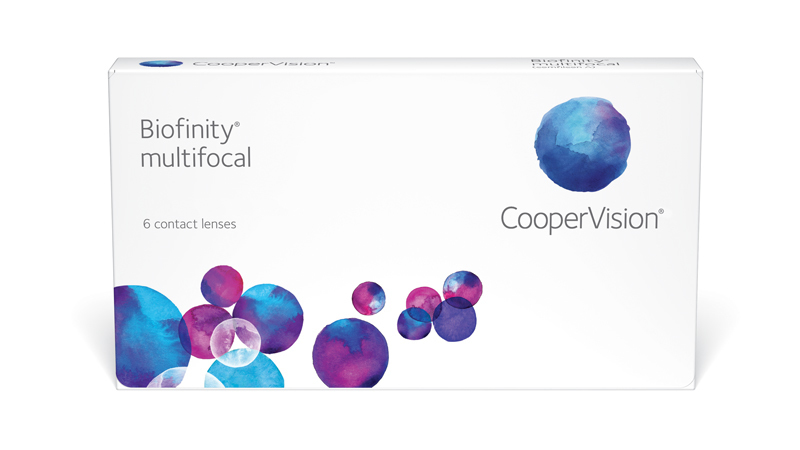
With the introduction of CooperVision's Biofinity Multifocal, we are also unveiling a new, streamlined fitting process. This new fitting process was developed based on eye care professionals’ real-world fitting experience.

We are confident that it will allow you to fit even more patients with ease and flexibility, delivering excellent vision at any distance.

  • Fitting lower ADD powers is now simpler than ever, by using the same D lens design for both eyes
  • Fitting higher ADD powers continues to be flexible, giving you more options for greater accuracy
  • Easy to use fitting guide to maximize success with our multifocal lens


Fitting the Biofinity Multifocal
Richard Clompus, OD, FAAO

Watch this video for an introduction to Biofinity Multifocal, as well as to learn about the simplified, 3 step fitting process.

Be sure to contact your CooperVision sales representative to start fitting Biofinity Multifocal in your practice!

In general, good candidates for toric soft contact lenses must possess the same qualities as good candidates for soft spherical contact lenses. Problems seen with soft contact lens wearers in general (such as poor compliance and deposits) can also plague the toric soft patient. Also, poor tear film and dry eyes can prevent patients from successful wear. Some practitioners suggest a lower water material, for patients with dryness problems.

To simplify toric soft contact lens fitting, we can ask ourselves several logical questions:

  1. Is this patient a candidate for toric soft contact lenses?
  2. What material best meets the patients needs?
  3. Which lens is available for the parameters that are necessary to fit the patient?

How is the toric lens (brand) design selected?

The first step is a good case history. Successful practitioners attribute their success with contact lenses to their communication or listening skills. Patient expectations should be discussed and product selection must be based on the patient's individual needs. Through your interview with the patient, you should be able to set criteria for this specific patient's needs, which will help you select the best possible product for this patient. Does the patient want to wear the lenses overnight? Does the patient want to wear contact lenses part time or full time? Would the patient be a good candidate for single use contact lenses? Once you establish the patient as a candidate for toric soft contact lenses, you must select a fitting method or philosophy. The choices are empirical or diagnostic fitting.

How is the toric soft contact lens design selected (empirical)?

Toric soft contact lenses that are fit empirically are fit off the patient’s spectacle prescription vertexed to the corneal plane. CooperVision's Toric Calculator is an excellent tool for converting a spectacle prescription to the contact lens prescription.

How is the toric soft contact lens design selected (diagnostic)?

Diagnostic fitting
Diagnostic fitting requires more chair-time to fit the patient, although the extra time involved may increase the likelihood of first fit success. The parameters are selected from a diagnostic set, and the lens is placed on the patient's eye and evaluated after the lens has equilibrated.

Combination of fitting philosophies
Many practitioners use a combination of the two fitting philosophies. If there is a diagnostic set of contact lenses handy, the first lens is chosen according to the empirical fitting guidelines. Lens performance is evaluated and if it appears acceptable, the patient is dispensed the diagnostic lenses. The patient is given an opportunity to evaluate the lenses under everyday wearing conditions. Upon return for follow-up, the lenses can be changed if they are not performing properly. It is possible for the rotation or the over-refraction to change over a week's period of time. A large inventory of diagnostic contact lenses is extremely helpful to insure success when fitting toric soft contact lenses. If diagnostic contact lenses are not available, many fitters will use the empirical fitting method.

Supplemental testing: Push-up test

The push-up test entails moving the lens up and down manually; the amount of movement and change in lens positioning can be observed. Tight or steep-fitting soft contact lenses will either be difficult to move or will not move at all. Loose or flat-fitting soft contact lenses will move an excessive amount. Stability of rotation can be judged with the push-up test. If the rotation changes more than 5 to 10 degrees on push-up, you may want to consider a lens change. This would largely depend on the patient's sensitivity to rotational changes.

Once the physical fitting characteristics of the lens are judged to be acceptable, a complete sphero- cylindrical over-refraction (SCOR) can be used to determine the final power. With the advent of handheld programmable calculators and Web-based programs (i.e. CooperVision's Toric Calculator), some practitioners exclusively use SCOR instead of LARS.

Please watch the video below. Dr. Richard Clompus will introduce you to the Biofinity Multifocal and the new, simplified fitting processs. Also, be sure to check out the other tabs for information from your peers ranging from when to have the multifocal conversation to how to manage patient expectations.